Dressing & Clothing for 4-Year-Old Preschoolers: Before-and-After Talk
If you want a low-pressure way to work on dressing & clothing for 4 year old preschoolers, this activity gives you a concrete place to start. The before-and-after talk idea turns dressing & clothing into something your child can see, do, hear, move, or talk about instead of something that feels like a lesson. You can try it in 6-10 minutes and stop while your child is still interested. Use the before-and-after talk idea to practice one small part of dressing & clothing during a calm moment, keeping the steps predictable and giving your child one manageable way to participate while the adult continues to guide the routine. Treat that as the starting idea, not a script you have to follow perfectly—adapt the pace, materials, and number of turns to your child’s interest.
Quick Activity
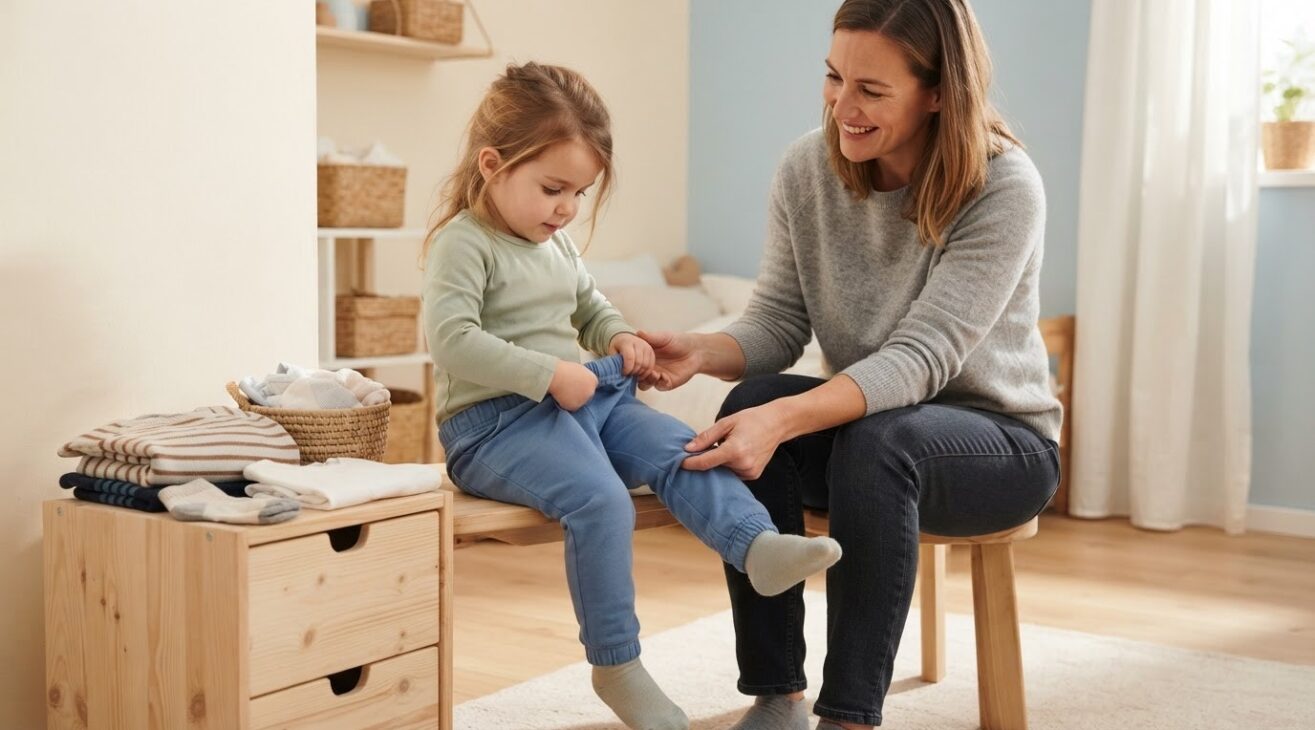
For this version, keep only what you need for one clear example. Use the before-and-after talk idea to practice one small part of dressing & clothing during a calm moment, keeping the steps predictable and giving your child one manageable way to participate while the adult continues to guide the routine. Spend roughly 6-10 minutes noticing, trying, and repeating. The activity is designed to support participating in clothing choices and simple dressing steps with adult help without pressuring your child to perform.
Related Resources
Looking for more ways to support dressing & clothing beyond this activity? Explore Learning Materials for learning materials and activity resources that make the skill easy to revisit through simple practice at home. For guided local or online learning opportunities, browse Early Learning & Preschool to find early-learning and preschool classes, programs, activities, businesses, or events where children can get guided practice with this learning area.
What This Practices
The value is not in completing the activity perfectly. It is in giving your child repeated chances to notice the same idea in a meaningful setting. Each turn lets you model participating in clothing choices and simple dressing steps with adult help, then pause long enough for your child to respond in their own way. The focus is not on speed or correctness; it is on giving your child a useful experience with dressing & clothing that is easy to repeat.
What You Need
- large paper and jumbo age-appropriate drawing or art materials
How to Do It
- Choose one small part of dressing & clothing to practice through the before-and-after talk idea. Do not try to teach the whole routine at once.
- Show the first step and use the same short phrase you plan to use during the real routine.
- Give your child one manageable participation job. A turn might look like predicting, explaining, creating, sorting, building, drawing, moving, comparing, or retelling, while the adult continues to guide the routine.
- Use simple sequence language—first, next, then, last—only when it makes the routine clearer.
- Finish the step and move on. The goal is familiarity and participation, not perfect independence.
What to Say
Keep your language short and connected to what is happening. You do not need to use every phrase below; choose a few that sound natural in your family.
- “First this.”
- “Your turn to help.”
- “Next we ___.”
- “Almost done.”
- “You did one step.”
- “Now comes the next part.”
What to Notice
There is no single response you need to see for the activity to be worthwhile. Look for small signs that your child is engaged with the idea.
- If interest fades, stop and try again another time; short positive experiences are easier to repeat.
- Your child may show interest through making a prediction, explaining what changed, planning a step, using a strategy, or connecting the idea to something familiar.
- The goal is participation and curiosity, not a perfect answer or finished product.
Make It Easier
If the before-and-after talk setup feels busy, remove extra choices and return to one clear example. Do the first example together and keep the materials visually simple. Give one clue instead of several instructions.
Try This Next
Add one manageable challenge: a new material, another category, a longer sequence, or a chance to explain why.
Use It in Everyday Life
The easiest way to keep learning useful is to let the same idea show up in ordinary moments. Try one of these simple extensions:
- Keep the same short phrases for familiar dressing & clothing steps so the sequence becomes predictable.
- Offer one small participation job instead of expecting your child to complete the whole routine independently.
- Practice a tricky step when there is extra time, not only when everyone is rushing.
Keep Learning
You can come back to dressing & clothing for 4 year old preschoolers whenever the same idea appears naturally in play or a daily routine. Within Daily Routines & Independence, related ideas to explore next include Asking for Help, Handwashing Routine, and Preschool / Classroom Routines. You do not need to work on them all at once; choose the one that naturally connects with what your child enjoyed today. Follow your child’s interest, keep the tone warm and low-pressure, and stop while the activity still feels successful.