Community Helper Pretend for 2-Year-Old Toddlers: Community Helper Pretend
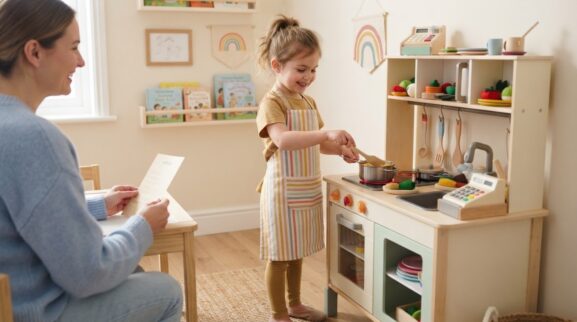
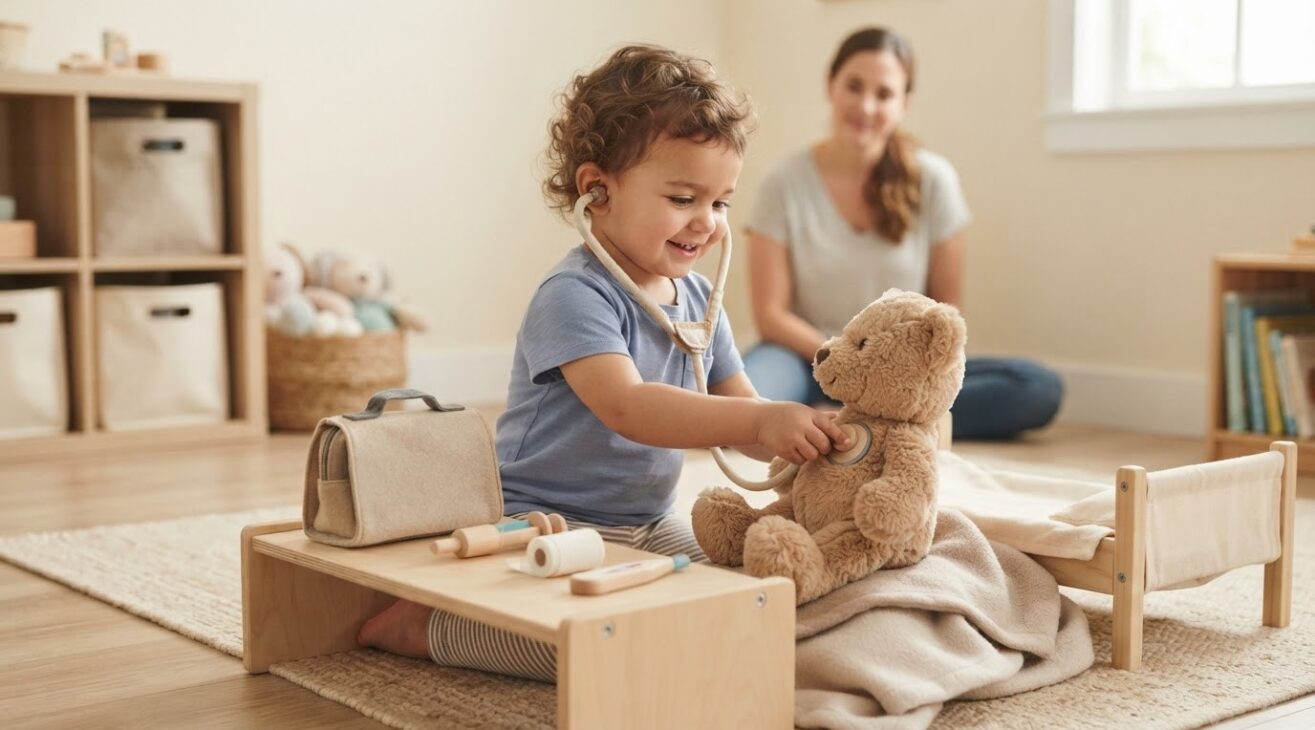
One easy starting point for community helper pretend for 2 year old toddlers is a familiar activity that gives your child time to look, move, listen, choose, or respond. This community helper pretend activity uses a familiar real-world moment so your child can explore community helper pretend through action and interaction. Plan on about 4-7 minutes; there is no need to stretch the activity if your child is ready to move on. Use the community helper pretend idea as an open-ended invitation for community helper pretend: offer a small set of safe materials or pretend props, begin with one idea, and then let your child’s choices shape what happens next. Treat that as the starting idea, not a script you have to follow perfectly—adapt the pace, materials, and number of turns to your child’s interest.
Quick Activity
Think of this as a short back-and-forth experience. Use the community helper pretend idea as an open-ended invitation for community helper pretend: offer a small set of safe materials or pretend props, begin with one idea, and then let your child’s choices shape what happens next. You provide the structure and simple language; your child can participate through pointing, speaking, sorting, moving, pretending, choosing, copying, or showing you an idea. The purpose is exploring familiar community roles through pretend actions, tools, places, and conversation, not finishing a set number of turns.
Related Resources
Looking for more ways to support community helper pretend beyond this activity? Explore Pretend Play for pretend-play materials that extend the learning idea through imagination, role-play, language, and familiar scenarios. For guided local or online learning opportunities, browse Early Learning & Preschool to find early-learning and preschool classes, programs, activities, businesses, or events where children can get guided practice with this learning area.
What This Practices
This kind of activity is useful because it connects the learning idea with a real experience. Instead of asking your child to remember something abstract, you give them something concrete to notice and respond to. For a 2-year-old toddler, participation can look like pointing, speaking, sorting, moving, pretending, choosing, copying, or showing you an idea. The focus is not on speed or correctness; it is on giving your child a useful experience with community helper pretend that is easy to repeat.
What You Need
- two or three familiar, age-appropriate toys or pretend-play props
Safety note: For children under 3, choose only large, age-appropriate materials and supervise the entire activity.
How to Do It
- Offer a small set of open-ended materials or pretend props for the community helper pretend invitation.
- Begin with one simple idea related to community helper pretend, then leave room for your child to change the story, object, role, or plan.
- Follow your child’s choices and join the play through pointing, speaking, sorting, moving, pretending, choosing, copying, or showing you an idea. Add language, a character, a sound, or one small problem only when it supports the idea.
- Ask one open prompt such as what happens next, where it goes, who lives here, or how it could change—then accept any reasonable answer.
- Leave the creation or story unfinished if your child wants to return to it later. Open-ended play does not need a polished ending.
What to Say
Keep your language short and connected to what is happening. You do not need to use every phrase below; choose a few that sound natural in your family.
- “Can we change it?”
- “Show me your idea.”
- “What should we make?”
- “Tell me about it.”
- “What happens next?”
- “Who lives here?”
What to Notice
There is no single response you need to see for the activity to be worthwhile. Look for small signs that your child is engaged with the idea.
- A surprising idea, a changed plan, or a story that goes in a new direction is part of the creative work—not a mistake.
- If interest fades, stop and try again another time; short positive experiences are easier to repeat.
- Your child may show interest through making a choice, following one simple step, matching or sorting, repeating a phrase, pretending, or trying another way.
Make It Easier
Reduce the activity to two choices and do the first turn yourself. Keep directions to one simple step.
Try This Next
Keep the successful part the same and change only one thing. Invite one small choice, explanation, or new example, then repeat the activity with a different familiar object or routine.
Use It in Everyday Life
The easiest way to keep learning useful is to let the same idea show up in ordinary moments. Try one of these simple extensions:
- Keep a few open-ended materials accessible and let your child decide what they become.
- Use everyday experiences—shopping, cooking, driving, caring for a doll, visiting a park—as starting points for community helper pretend.
- Ask about your child’s idea instead of directing the play toward one correct finished result.
Keep Learning
You can come back to community helper pretend for 2 year old toddlers whenever the same idea appears naturally in play or a daily routine. Within Creativity & Pretend Play, related ideas to explore next include Color Mixing & Art Discovery, Pretend Kitchen & Food, and Story Creation. You do not need to work on them all at once; choose the one that naturally connects with what your child enjoyed today. Follow your child’s interest, keep the tone warm and low-pressure, and stop while the activity still feels successful.