Stacking & Nesting for 7-9-Month-Old Babies: Art-and-Motor Activity
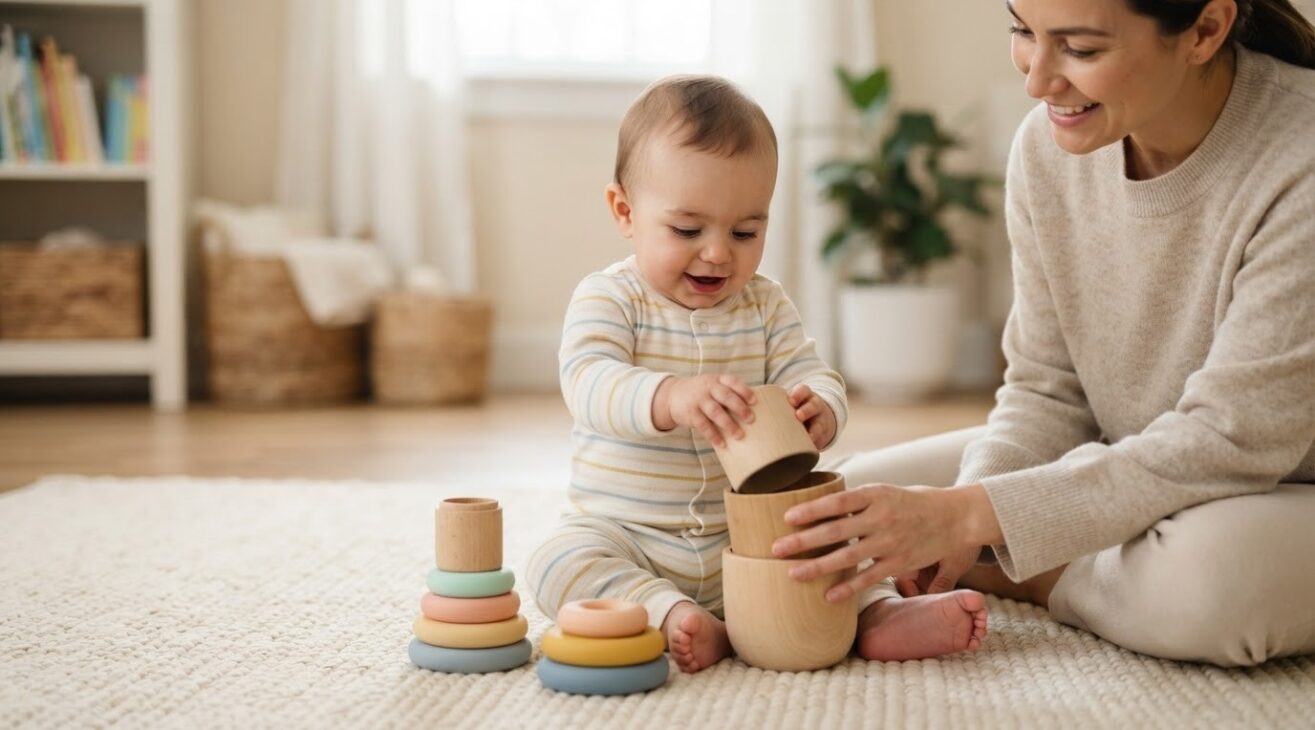
If you want a low-pressure way to work on stacking & nesting for 7-9 month old babies, this activity gives you a concrete place to start. The goal is to make stacking & nesting concrete, playful, and easy to repeat. This art-and-motor activity setup gives you a practical way to do that with a baby 7-9 months old using everyday interaction. Set up the art-and-motor activity idea as a short supervised hands-on activity for stacking & nesting, using age-appropriate materials so your child can repeat the key hand, eye, or sensory action at a comfortable pace. Treat that as the starting idea, not a script you have to follow perfectly—adapt the pace, materials, and number of turns to your child’s interest.
Quick Activity
For this version, keep only what you need for one clear example. Set up the art-and-motor activity idea as a short supervised hands-on activity for stacking & nesting, using age-appropriate materials so your child can repeat the key hand, eye, or sensory action at a comfortable pace. Spend roughly 2-3 minutes noticing, trying, and repeating. The activity is designed to support aligning, placing, balancing, and arranging objects with the hands without pressuring your child to perform.
Related Resources
Looking for more ways to support stacking & nesting beyond this activity? Explore Sorting, Stacking & Building for sorting, stacking, and building materials that support hands-on exploration, comparison, construction, and problem solving. For guided local or online learning opportunities, browse Early Learning & Preschool to find early-learning and preschool classes, programs, activities, businesses, or events where children can get guided practice with this learning area.
What This Practices
This kind of activity is useful because it connects the learning idea with a real experience. Instead of asking your child to remember something abstract, you give them something concrete to notice and respond to. For a baby 7-9 months old, participation can look like looking, reaching, touching, moving, babbling, copying a simple action, or searching for an object. The focus is not on speed or correctness; it is on giving your child a useful experience with stacking & nesting that is easy to repeat.
What You Need
- a small set of large age-appropriate blocks or building pieces
- large paper and jumbo age-appropriate drawing or art materials
Safety note: For children under 3, choose only large, age-appropriate materials and supervise the entire activity.
How to Do It
- Arrange the art-and-motor activity materials so your child can reach them comfortably and the main action for stacking & nesting is easy to see.
- Demonstrate the movement slowly—reach, grasp, place, press, draw, transfer, squeeze, guide, or manipulate—without turning it into a correction exercise.
- Let your child try in their own way. Participation can include looking, reaching, touching, moving, babbling, copying a simple action, or searching for an object; help only enough to keep the materials safe and usable.
- Repeat the same hand or sensory action several times, then make one small change such as position, texture, direction, size, or target.
- Stop when hands look tired or interest drops. End with a simple observation about what your child did rather than how neatly it looked.
What to Say
Keep your language short and connected to what is happening. You do not need to use every phrase below; choose a few that sound natural in your family.
- “Press gently.”
- “Use two hands.”
- “Try a slow movement.”
- “You changed how it looks or feels.”
- “Pick it up.”
- “Place it here.”
What to Notice
There is no single response you need to see for the activity to be worthwhile. Look for small signs that your child is engaged with the idea.
- Your child may show interest through reaching with purpose, shifting attention, searching, moving toward an object, babbling, or trying the action again.
- The goal is participation and curiosity, not a perfect answer or finished product.
- If interest fades, stop and try again another time; short positive experiences are easier to repeat.
Make It Easier
Make the next turn easier before adding anything new. Use only one or two large familiar items and demonstrate the action first while staying close on the floor.
Try This Next
Try the same skill in a second familiar place or with one different large object so the idea stays recognizable.
Use It in Everyday Life
The easiest way to keep learning useful is to let the same idea show up in ordinary moments. Try one of these simple extensions:
- Keep sessions short and stop before hands are tired or frustration takes over.
- Invite participation in safe everyday tasks such as placing, carrying, drawing, pouring, turning pages, or putting items away.
- Repeat the hand or sensory action used in stacking & nesting with different safe materials so practice stays fresh.
Keep Learning
Think of stacking & nesting for 7-9 month old babies as something to revisit in small moments rather than something to master in one sitting. Within Fine Motor & Sensory, related ideas to explore next include Cutting & Paper Skills, Play Dough & Molding, and Reaching & Grasping. You do not need to work on them all at once; choose the one that naturally connects with what your child enjoyed today. Follow your child’s interest, keep the tone warm and low-pressure, and stop while the activity still feels successful.