Scribble & Free Drawing for 1-Year-Old Toddlers: Art From Shapes
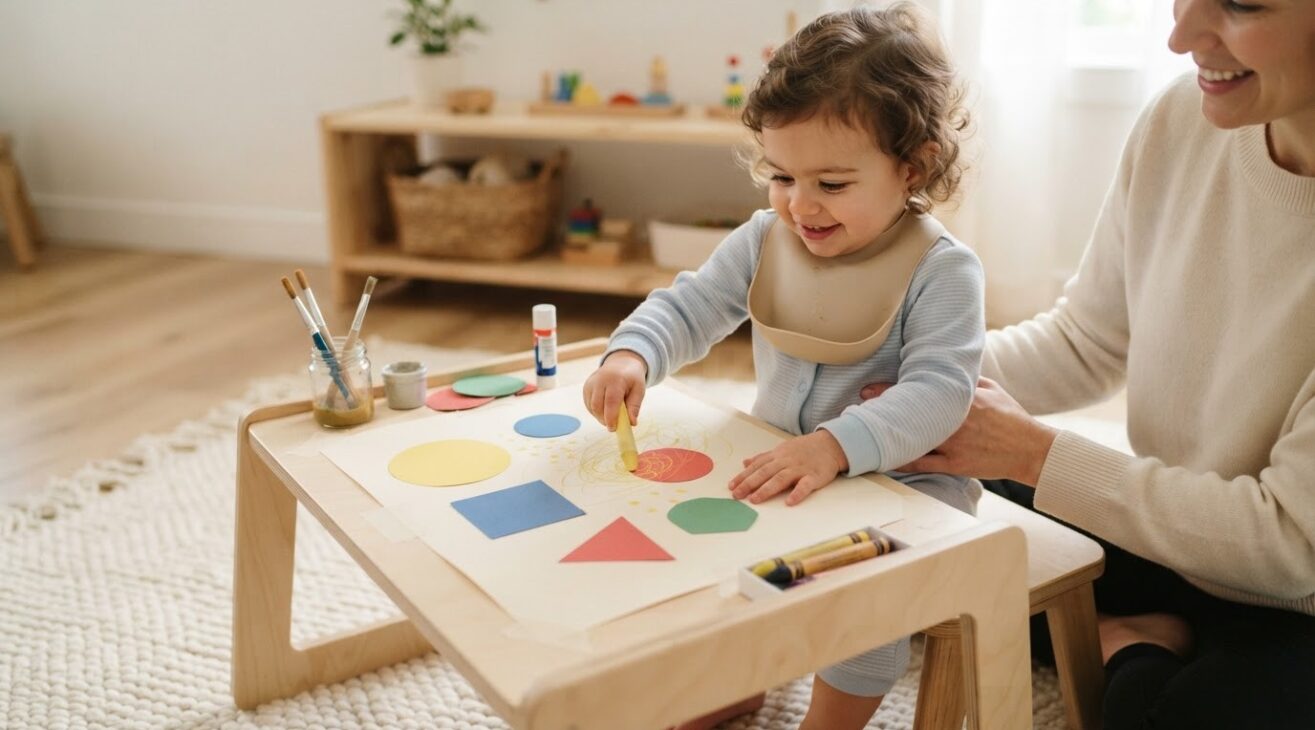
One easy starting point for scribble & free drawing for 1 year old toddlers is a familiar activity that gives your child time to look, move, listen, choose, or respond. This art from shapes idea starts with something familiar and turns it into a few minutes of purposeful play. The adult models the idea, the child joins in however they can, and the activity ends before it starts to feel like work. Use the art from shapes idea as an open-ended invitation for scribble & free drawing: offer a small set of safe materials or pretend props, begin with one idea, and then let your child’s choices shape what happens next. Treat that as the starting idea, not a script you have to follow perfectly—adapt the pace, materials, and number of turns to your child’s interest.
Quick Activity
Set aside 3-5 minutes for the activity. Use the art from shapes idea as an open-ended invitation for scribble & free drawing: offer a small set of safe materials or pretend props, begin with one idea, and then let your child’s choices shape what happens next. Keep the setup visually simple, model one clear example, and let your child join through looking, pointing, moving an object, copying an action, choosing, gesturing, or trying a word. The learning focus is open-ended mark making, choice making, and creative expression.
Related Resources
Looking for more ways to support scribble & free drawing beyond this activity? Explore Arts & Music for art and music materials that extend the skill through creative, sensory, rhythmic, and hands-on activities. For guided local or online learning opportunities, browse Art & Creativity to find art classes, creative workshops, studios, lessons, or events where children can explore the skill with guidance.
What This Practices
The value is not in completing the activity perfectly. It is in giving your child repeated chances to notice the same idea in a meaningful setting. Each turn lets you model open-ended mark making, choice making, and creative expression, then pause long enough for your child to respond in their own way. The focus is not on speed or correctness; it is on giving your child a useful experience with scribble & free drawing that is easy to repeat.
What You Need
- two or three familiar, age-appropriate toys or pretend-play props
- large paper and jumbo age-appropriate drawing or art materials
Safety note: For children under 3, choose only large, age-appropriate materials and supervise the entire activity.
How to Do It
- Offer a small set of open-ended materials or pretend props for the art from shapes invitation.
- Begin with one simple idea related to scribble & free drawing, then leave room for your child to change the story, object, role, or plan.
- Follow your child’s choices and join the play through looking, pointing, moving an object, copying an action, choosing, gesturing, or trying a word. Add language, a character, a sound, or one small problem only when it supports the idea.
- Ask one open prompt such as what happens next, where it goes, who lives here, or how it could change—then accept any reasonable answer.
- Leave the creation or story unfinished if your child wants to return to it later. Open-ended play does not need a polished ending.
What to Say
Keep your language short and connected to what is happening. You do not need to use every phrase below; choose a few that sound natural in your family.
- “Show me your idea.”
- “What should we make?”
- “Tell me about it.”
- “What happens next?”
- “Who lives here?”
- “Can we change it?”
What to Notice
There is no single response you need to see for the activity to be worthwhile. Look for small signs that your child is engaged with the idea.
- Your child may show interest through pointing, copying, choosing, moving an item intentionally, using a gesture, or trying part of a word or action.
- A surprising idea, a changed plan, or a story that goes in a new direction is part of the creative work—not a mistake.
- If interest fades, stop and try again another time; short positive experiences are easier to repeat.
Make It Easier
If the art from shapes setup feels busy, remove extra choices and return to one clear example. Use one clear example, one short phrase, and plenty of modeling. Pointing or moving an object can be the whole turn.
Try This Next
Keep the successful part the same and change only one thing. Add one second example or repeat the same skill during another familiar routine later in the day.
Use It in Everyday Life
The easiest way to keep learning useful is to let the same idea show up in ordinary moments. Try one of these simple extensions:
- Keep a few open-ended materials accessible and let your child decide what they become.
- Use everyday experiences—shopping, cooking, driving, caring for a doll, visiting a park—as starting points for scribble & free drawing.
- Ask about your child’s idea instead of directing the play toward one correct finished result.
Keep Learning
This is one practical way to revisit scribble & free drawing for 1 year old toddlers through short, playful practice. Within Creativity & Pretend Play, related ideas to explore next include Animal Pretend Play, Creative Problem Solving, and Puppets & Character Play. You do not need to work on them all at once; choose the one that naturally connects with what your child enjoyed today. Follow your child’s interest, keep the tone warm and low-pressure, and stop while the activity still feels successful.