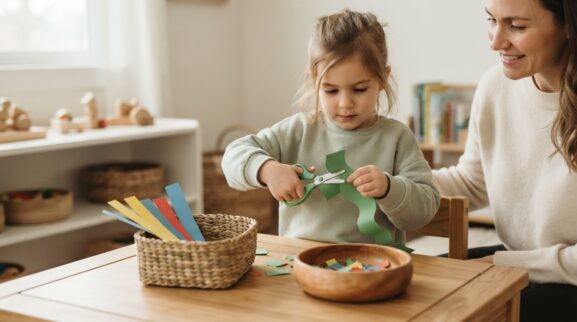
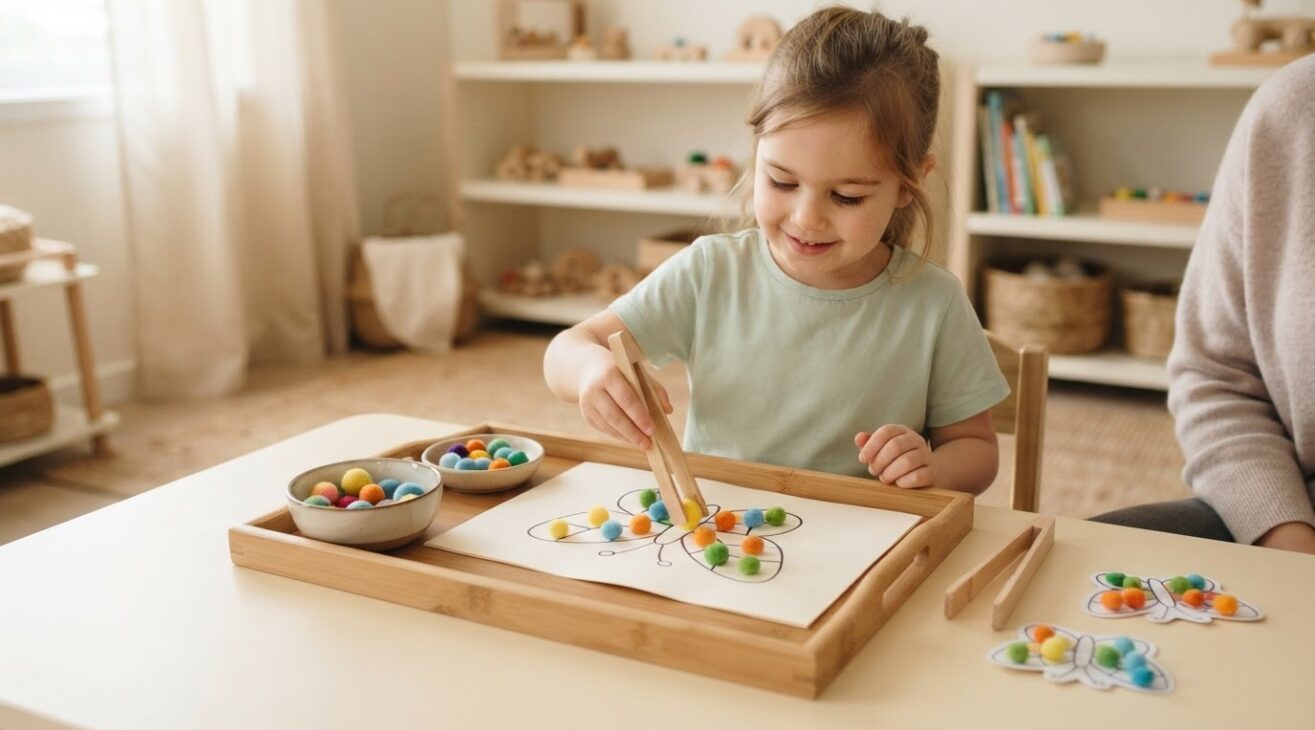
Tongs / Tweezers for 5-Year-Old Children: Make-and-Do Activity
If you want a low-pressure way to work on tongs / tweezers for 5 year old children, this activity gives you a concrete place to start. This make-and-do activity idea starts with something familiar and turns it into a few minutes of purposeful play. The adult models the idea, the child joins in however they can, and the activity ends before it starts to feel like work. Set up the make-and-do activity idea as a short supervised hands-on activity for tongs / tweezers, using age-appropriate materials so your child can repeat the key hand, eye, or sensory action at a comfortable pace. Treat that as the starting idea, not a script you have to follow perfectly—adapt the pace, materials, and number of turns to your child’s interest.
Quick Activity
For this version, keep only what you need for one clear example. Set up the make-and-do activity idea as a short supervised hands-on activity for tongs / tweezers, using age-appropriate materials so your child can repeat the key hand, eye, or sensory action at a comfortable pace. Spend roughly 7-12 minutes noticing, trying, and repeating. The activity is designed to support using a controlled pinch-and-release motion with an age-appropriate tool without pressuring your child to perform.
Related Resources
Looking for more ways to support tongs / tweezers beyond this activity? Explore Fine Motor & Sensory for fine-motor and sensory materials that give children more supervised hands-on ways to practice the skill. For guided local or online learning opportunities, browse Early Learning & Preschool to find early-learning and preschool classes, programs, activities, businesses, or events where children can get guided practice with this learning area.
What This Practices
The value is not in completing the activity perfectly. It is in giving your child repeated chances to notice the same idea in a meaningful setting. Each turn lets you model using a controlled pinch-and-release motion with an age-appropriate tool, then pause long enough for your child to respond in their own way. The focus is not on speed or correctness; it is on giving your child a useful experience with tongs / tweezers that is easy to repeat.
What You Need
- an age-appropriate tong or tweezer tool with large objects
Safety note: Use tools and components specifically intended for the child’s age and supervise closely.
How to Do It
- Arrange the make-and-do activity materials so your child can reach them comfortably and the main action for tongs / tweezers is easy to see.
- Demonstrate the movement slowly—reach, grasp, place, press, draw, transfer, squeeze, guide, or manipulate—without turning it into a correction exercise.
- Let your child try in their own way. Participation can include planning, comparing, explaining, creating, testing, retelling, building, drawing, or teaching the idea back to you; help only enough to keep the materials safe and usable.
- Repeat the same hand or sensory action several times, then make one small change such as position, texture, direction, size, or target.
- Stop when hands look tired or interest drops. End with a simple observation about what your child did rather than how neatly it looked.
What to Say
Keep your language short and connected to what is happening. You do not need to use every phrase below; choose a few that sound natural in your family.
- “You changed how it looks or feels.”
- “Pick it up.”
- “Place it here.”
- “Press gently.”
- “Use two hands.”
- “Try a slow movement.”
What to Notice
There is no single response you need to see for the activity to be worthwhile. Look for small signs that your child is engaged with the idea.
- If interest fades, stop and try again another time; short positive experiences are easier to repeat.
- Your child may show interest through planning, explaining evidence, revising an idea, creating a new example, or using the skill independently in play.
- The goal is participation and curiosity, not a perfect answer or finished product.
Make It Easier
If the make-and-do activity setup feels busy, remove extra choices and return to one clear example. Return to a concrete example and complete the first step together before inviting your child to continue.
Try This Next
Once the make-and-do activity idea feels familiar, keep the same basic structure but change one feature—location, object, order, role, or example. Let your child extend the idea independently, invent a new example, compare two approaches, or explain how the activity works.
Use It in Everyday Life
The easiest way to keep learning useful is to let the same idea show up in ordinary moments. Try one of these simple extensions:
- Invite participation in safe everyday tasks such as placing, carrying, drawing, pouring, turning pages, or putting items away.
- Repeat the hand or sensory action used in tongs / tweezers with different safe materials so practice stays fresh.
- Keep sessions short and stop before hands are tired or frustration takes over.
Keep Learning
Repeating tongs / tweezers for 5 year old children in a few meaningful contexts can make the idea more familiar without turning it into drill work. Within Fine Motor & Sensory, related ideas to explore next include Cutting & Paper Skills, Play Dough & Molding, and Reaching & Grasping. You do not need to work on them all at once; choose the one that naturally connects with what your child enjoyed today. Follow your child’s interest, keep the tone warm and low-pressure, and stop while the activity still feels successful.