Music & Storytelling for 4-Year-Old Preschoolers: Instrument Detective
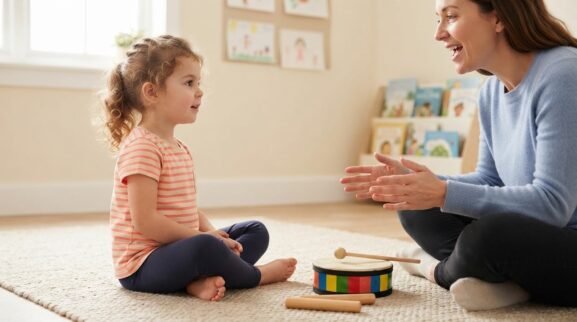
One easy starting point for music & storytelling for 4 year old preschoolers is a familiar activity that gives your child time to look, move, listen, choose, or respond. This instrument detective activity keeps music & storytelling concrete and low-pressure, giving a 4-year-old preschooler a chance to explore the idea through real play and conversation. Use the instrument detective idea for a short listening-and-response activity centered on music & storytelling: model one sound, beat, song cue, or movement, pause for your child’s response, and repeat with one small variation. Treat that as the starting idea, not a script you have to follow perfectly—adapt the pace, materials, and number of turns to your child’s interest.
Quick Activity
Set aside 6-10 minutes for the activity. Use the instrument detective idea for a short listening-and-response activity centered on music & storytelling: model one sound, beat, song cue, or movement, pause for your child’s response, and repeat with one small variation. Keep the setup visually simple, model one clear example, and let your child join through predicting, explaining, creating, sorting, building, drawing, moving, comparing, or retelling. The learning focus is using music and sound effects to support characters, actions, mood, and story sequence.
Related Resources
Looking for more ways to support music & storytelling beyond this activity? Explore Arts & Music for art and music materials that extend the skill through creative, sensory, rhythmic, and hands-on activities. For guided local or online learning opportunities, browse Music to find music classes, rhythm programs, sing-alongs, lessons, or events for guided musical learning.
What This Practices
This kind of activity is useful because it connects the learning idea with a real experience. Instead of asking your child to remember something abstract, you give them something concrete to notice and respond to. For a 4-year-old preschooler, participation can look like predicting, explaining, creating, sorting, building, drawing, moving, comparing, or retelling. The focus is not on speed or correctness; it is on giving your child a useful experience with music & storytelling that is easy to repeat.
What You Need
- one familiar board book, picture book, or meaningful piece of print
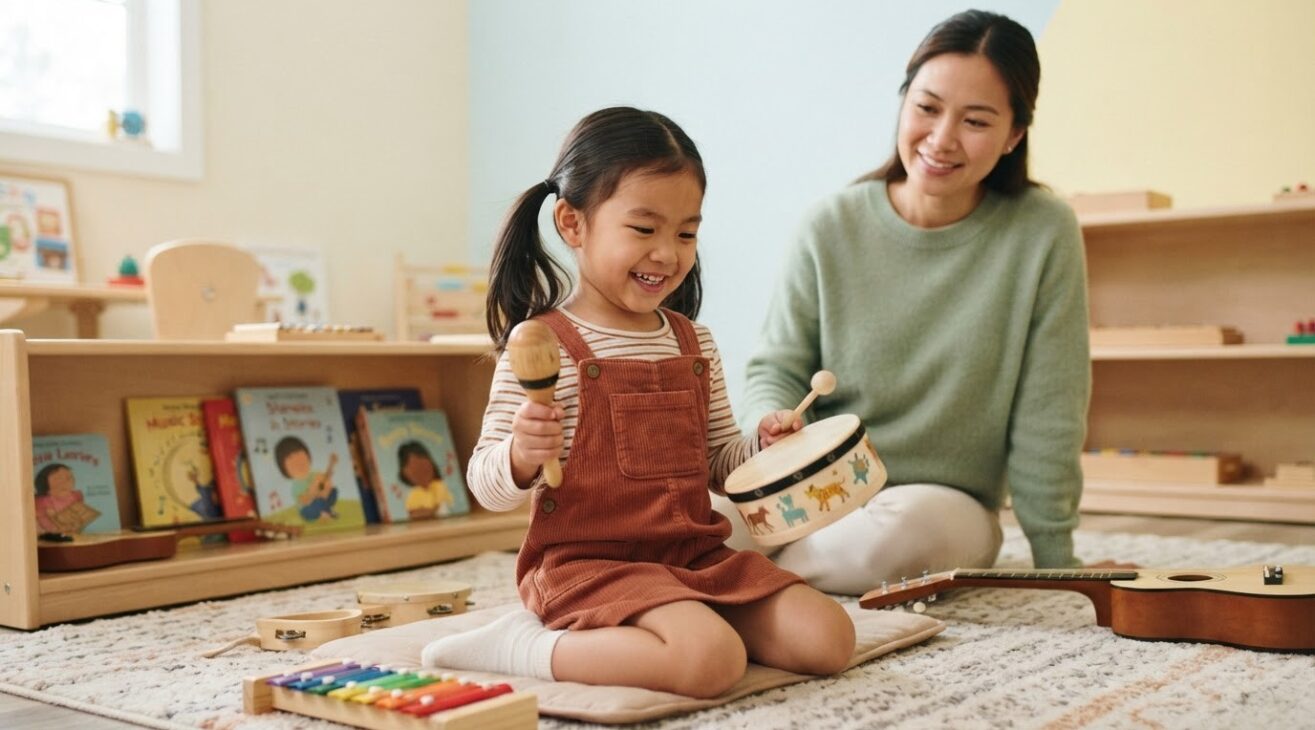
- your voice, body percussion, or one age-appropriate sound-making item
- a clear, safe movement space
Safety note: Keep the movement area clear, stable, and appropriate for the child’s current mobility.
How to Do It
- Begin the instrument detective activity with one short sound, beat, song phrase, or movement pattern connected to music & storytelling.
- Model the sound or contrast clearly enough that your child can hear or see the difference without making it too loud or complicated.
- Pause for a response through predicting, explaining, creating, sorting, building, drawing, moving, comparing, or retelling. A look, smile, body movement, vocalization, tap, clap, or copied action can all count.
- Repeat, then change one feature such as speed, volume, instrument, movement, rhythm, or whose turn comes next.
- End by returning to the original sound or pattern once so the activity feels complete and familiar.
What to Say
Keep your language short and connected to what is happening. You do not need to use every phrase below; choose a few that sound natural in your family.
- “Can you hear it?”
- “Let’s copy the beat.”
- “Your turn to make a sound.”
- “Again!”
- “Listen.”
- “Tap, tap.”
What to Notice
There is no single response you need to see for the activity to be worthwhile. Look for small signs that your child is engaged with the idea.
- If interest fades, stop and try again another time; short positive experiences are easier to repeat.
- Your child may show interest through making a prediction, explaining what changed, planning a step, using a strategy, or connecting the idea to something familiar.
- The goal is participation and curiosity, not a perfect answer or finished product.
Make It Easier
Make the next turn easier before adding anything new. Do the first example together and keep the materials visually simple. Give one clue instead of several instructions.
Try This Next
Keep the successful part the same and change only one thing. Add one manageable challenge: a new material, another category, a longer sequence, or a chance to explain why.
Use It in Everyday Life
The easiest way to keep learning useful is to let the same idea show up in ordinary moments. Try one of these simple extensions:
- Use claps, taps, footsteps, and your voice as simple instruments that are always available.
- Pause during music so your child can add a sound, beat, word, or movement related to music & storytelling.
- Sing short repeated songs during cleanup, dressing, walking, or transitions.
Keep Learning
This is one practical way to revisit music & storytelling for 4 year old preschoolers through short, playful practice. Within Music, Rhythm & Listening, related ideas to explore next include Freeze & Listening Games, Loud / Soft, and Sound Matching. You do not need to work on them all at once; choose the one that naturally connects with what your child enjoyed today. Follow your child’s interest, keep the tone warm and low-pressure, and stop while the activity still feels successful.