Direction Words with a Laundry Color Hunt for 1-Year-Old Toddlers
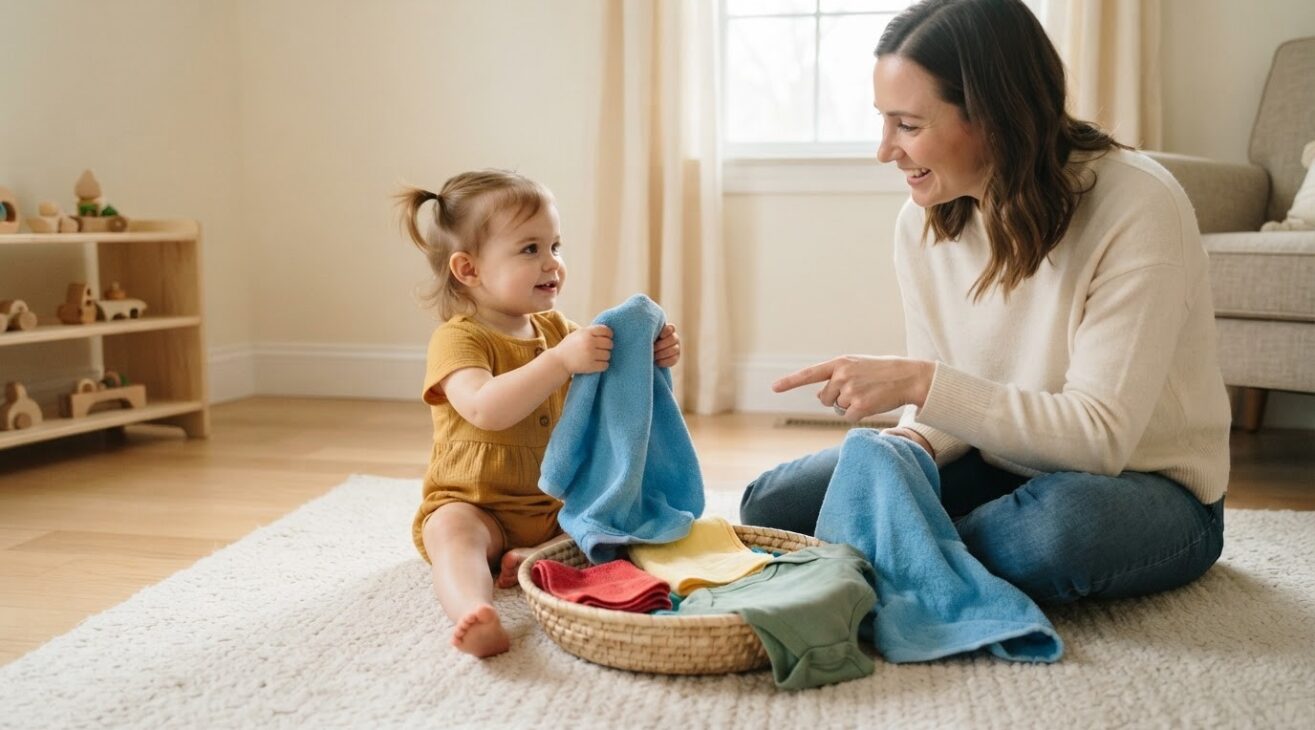
If you want a low-pressure way to work on direction words with a laundry color hunt for 1 year old toddlers, this activity gives you a concrete place to start. The purpose of this laundry color hunt activity is simple: make direction words visible, active, and enjoyable enough to revisit on another day. Turn the laundry color hunt idea into a simple concept hunt for direction words: choose two to four clear real-world examples, name the concept while your child looks or handles them, then match, compare, move, or find another example. Treat that as the starting idea, not a script you have to follow perfectly—adapt the pace, materials, and number of turns to your child’s interest.
Quick Activity
For this version, keep only what you need for one clear example. Turn the laundry color hunt idea into a simple concept hunt for direction words: choose two to four clear real-world examples, name the concept while your child looks or handles them, then match, compare, move, or find another example. Spend roughly 3-5 minutes noticing, trying, and repeating. The activity is designed to support connecting movement words such as up, down, forward, backward, left, and right with actions without pressuring your child to perform.
Related Resources
Looking for more ways to support direction words beyond this activity? Explore Flashcards & Learning Cards for picture, word, and concept cards that make the skill easy to revisit in short, playful practice. For guided local or online learning opportunities, browse Early Learning & Preschool to find early-learning and preschool classes, programs, activities, businesses, or events where children can get guided practice with this learning area.
What This Practices
The value is not in completing the activity perfectly. It is in giving your child repeated chances to notice the same idea in a meaningful setting. Each turn lets you model connecting movement words such as up, down, forward, backward, left, and right with actions, then pause long enough for your child to respond in their own way. The focus is not on speed or correctness; it is on giving your child a useful experience with direction words that is easy to repeat.
What You Need
- two to four familiar objects that clearly show the target color, shape, size, position, or concept
- a few large familiar objects, pictures, or household items
Safety note: For children under 3, choose only large, age-appropriate materials and supervise the entire activity.
How to Do It
- Choose two to four clear examples for the laundry color hunt activity. A simple setup makes direction words easier to notice.
- Name the target idea while pointing to or handling one obvious example of direction words. Show first; questions can come later.
- Invite your child to find, move, match, compare, or act out one second example through looking, pointing, moving an object, copying an action, choosing, gesturing, or trying a word.
- Put two examples side by side and describe what is the same, different, bigger, smaller, above, below, earlier, later, or otherwise relevant to the concept.
- Look for one final example somewhere else in the room, routine, book, or outdoor space so the concept connects to real life.
What to Say
Keep your language short and connected to what is happening. You do not need to use every phrase below; choose a few that sound natural in your family.
- “Let’s change direction.”
- “Go up.”
- “Come down.”
- “Move forward.”
- “Step back.”
- “Turn this way.”
What to Notice
There is no single response you need to see for the activity to be worthwhile. Look for small signs that your child is engaged with the idea.
- Your child may show interest through pointing, copying, choosing, moving an item intentionally, using a gesture, or trying part of a word or action.
- The goal is participation and curiosity, not a perfect answer or finished product.
- If interest fades, stop and try again another time; short positive experiences are easier to repeat.
Make It Easier
Use one clear example, one short phrase, and plenty of modeling. Pointing or moving an object can be the whole turn.
Try This Next
Keep the successful part the same and change only one thing. Add one second example or repeat the same skill during another familiar routine later in the day.
Use It in Everyday Life
The easiest way to keep learning useful is to let the same idea show up in ordinary moments. Try one of these simple extensions:
- Compare only a few clear examples at a time and give your child time to notice before asking questions.
- Point out direction words on clothing, dishes, toys, rooms, signs, or outdoor objects.
- Use the same concept word in different places so your child sees that the idea applies beyond one activity.
Keep Learning
Repeating direction words with a laundry color hunt for 1 year old toddlers in a few meaningful contexts can make the idea more familiar without turning it into drill work. Within Colors, Shapes & Everyday Concepts, related ideas to explore next include Positions & Spatial Words, Shape Recognition, and Color Recognition. You do not need to work on them all at once; choose the one that naturally connects with what your child enjoyed today. Follow your child’s interest, keep the tone warm and low-pressure, and stop while the activity still feels successful.