Object Permanence for 1-Year-Old Toddlers: Plan a Tiny Build
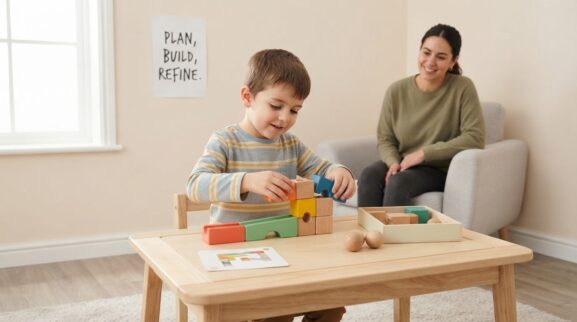
You can practice object permanence for 1 year old toddlers in ordinary play; the key is to keep the experience short, clear, and connected to real meaning. This plan a tiny build activity keeps object permanence concrete and low-pressure, giving a 1-year-old toddler a chance to explore the idea through real play and conversation. Turn the plan a tiny build idea into one small challenge centered on object permanence: show the situation, give your child time to notice or try, and offer one clue only if it helps them continue. Treat that as the starting idea, not a script you have to follow perfectly—adapt the pace, materials, and number of turns to your child’s interest.
Quick Activity
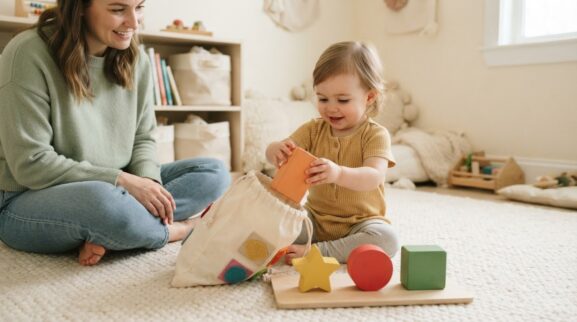
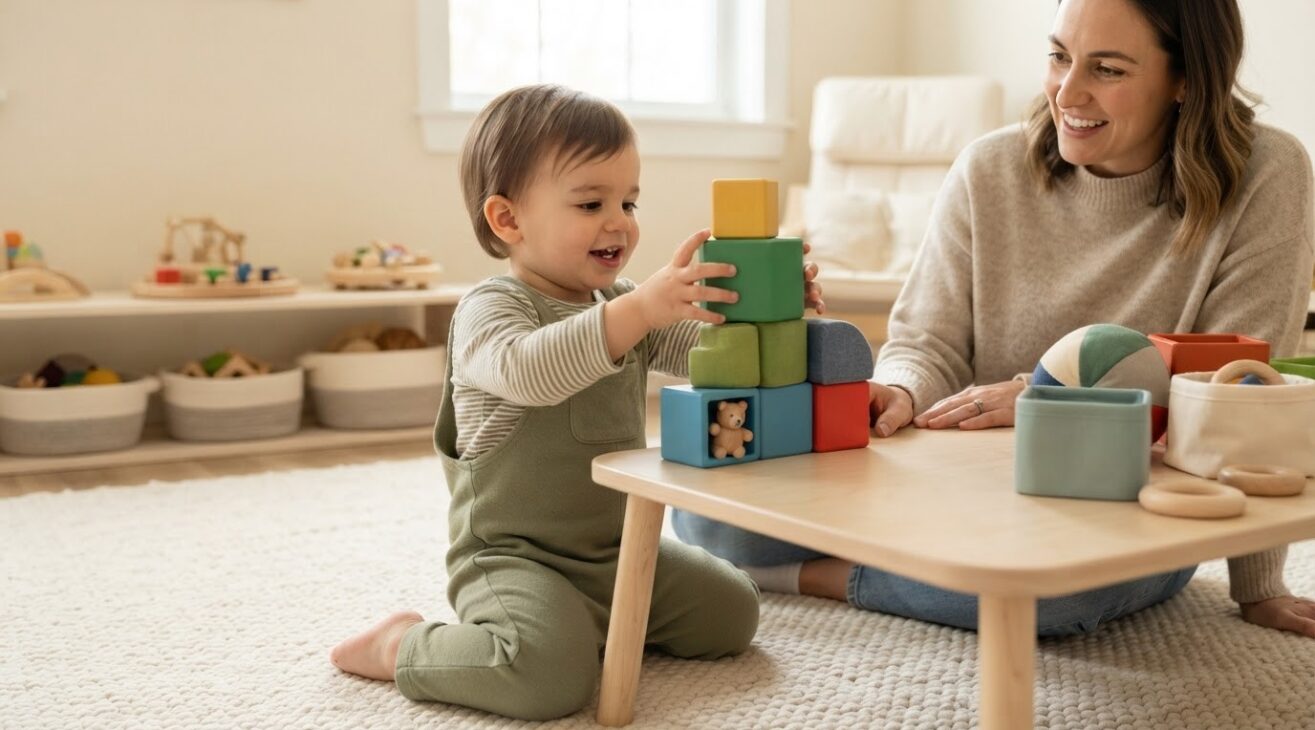
Use the plan a tiny build idea as a tiny play invitation rather than a test. Turn the plan a tiny build idea into one small challenge centered on object permanence: show the situation, give your child time to notice or try, and offer one clue only if it helps them continue. Show the first turn yourself, pause, and let your child’s response decide whether you repeat, simplify, or add one small variation. This supports understanding that an object still exists even when it is partly or fully out of sight.
Related Resources
Looking for more ways to support object permanence beyond this activity? Explore Puzzles & Games for puzzles and learning games that turn the skill into hands-on matching, memory, thinking, and problem solving. For guided local or online learning opportunities, browse Early Learning & Preschool to find early-learning and preschool classes, programs, activities, businesses, or events where children can get guided practice with this learning area.
What This Practices
This kind of activity is useful because it connects the learning idea with a real experience. Instead of asking your child to remember something abstract, you give them something concrete to notice and respond to. For a 1-year-old toddler, participation can look like looking, pointing, moving an object, copying an action, choosing, gesturing, or trying a word. The focus is not on speed or correctness; it is on giving your child a useful experience with object permanence that is easy to repeat.
What You Need
- a small set of large age-appropriate blocks or building pieces
Safety note: For children under 3, choose only large, age-appropriate materials and supervise the entire activity.
How to Do It
- Present one small challenge through the plan a tiny build activity. Make the goal visible and manageable rather than explaining every step.
- Wait before helping. Give your child time to look, remember, match, fit, plan, test, or try an idea.
- If needed, offer one clue rather than the solution. Point to a feature, move one item closer, repeat the sequence, or model the first step while allowing looking, pointing, moving an object, copying an action, choosing, gesturing, or trying a word.
- Let your child try again or try a second way. Treat unsuccessful attempts as useful information instead of mistakes.
- Briefly talk about what worked, changed, or helped, then finish before the challenge becomes frustrating.
What to Say
Keep your language short and connected to what is happening. You do not need to use every phrase below; choose a few that sound natural in your family.
- “Part of it is showing.”
- “There it is!”
- “Where did it go?”
- “It’s still there.”
- “Let’s find it.”
- “Peekaboo!”
What to Notice
There is no single response you need to see for the activity to be worthwhile. Look for small signs that your child is engaged with the idea.
- If interest fades, stop and try again another time; short positive experiences are easier to repeat.
- Your child may show interest through pointing, copying, choosing, moving an item intentionally, using a gesture, or trying part of a word or action.
- A second attempt, a changed strategy, or a pause to look more closely can be just as meaningful as solving the challenge.
Make It Easier
Use one clear example, one short phrase, and plenty of modeling. Pointing or moving an object can be the whole turn.
Try This Next
Use the same skill in a second everyday context so your child sees that object permanence can show up in more than one place. Add one second example or repeat the same skill during another familiar routine later in the day.
Use It in Everyday Life
The easiest way to keep learning useful is to let the same idea show up in ordinary moments. Try one of these simple extensions:
- Revisit object permanence with familiar toys or household objects so your child can use the same thinking skill in a new setting.
- Leave small, manageable problems in play for a moment before stepping in with the answer.
- During routines, use simple planning language such as what comes next, where it belongs, or what else could work.
Keep Learning
Repeating object permanence for 1 year old toddlers in a few meaningful contexts can make the idea more familiar without turning it into drill work. Within Thinking, Memory & Problem Solving, related ideas to explore next include Logic & Reasoning, Planning & Persistence, and Attention & Following Directions. You do not need to work on them all at once; choose the one that naturally connects with what your child enjoyed today. Follow your child’s interest, keep the tone warm and low-pressure, and stop while the activity still feels successful.