Color Recognition with a First-Next-Last Routine for 3-Year-Old Preschoolers
If you want a low-pressure way to work on color recognition with a first-next-last routine for 3 year old preschoolers, this activity gives you a concrete place to start. The first-next-last routine idea turns color recognition into something your child can see, do, hear, move, or talk about instead of something that feels like a lesson. You can try it in 5-8 minutes and stop while your child is still interested. Turn the first-next-last routine idea into a simple concept hunt for color recognition: choose two to four clear real-world examples, name the concept while your child looks or handles them, then match, compare, move, or find another example. Treat that as the starting idea, not a script you have to follow perfectly—adapt the pace, materials, and number of turns to your child’s interest.
Quick Activity
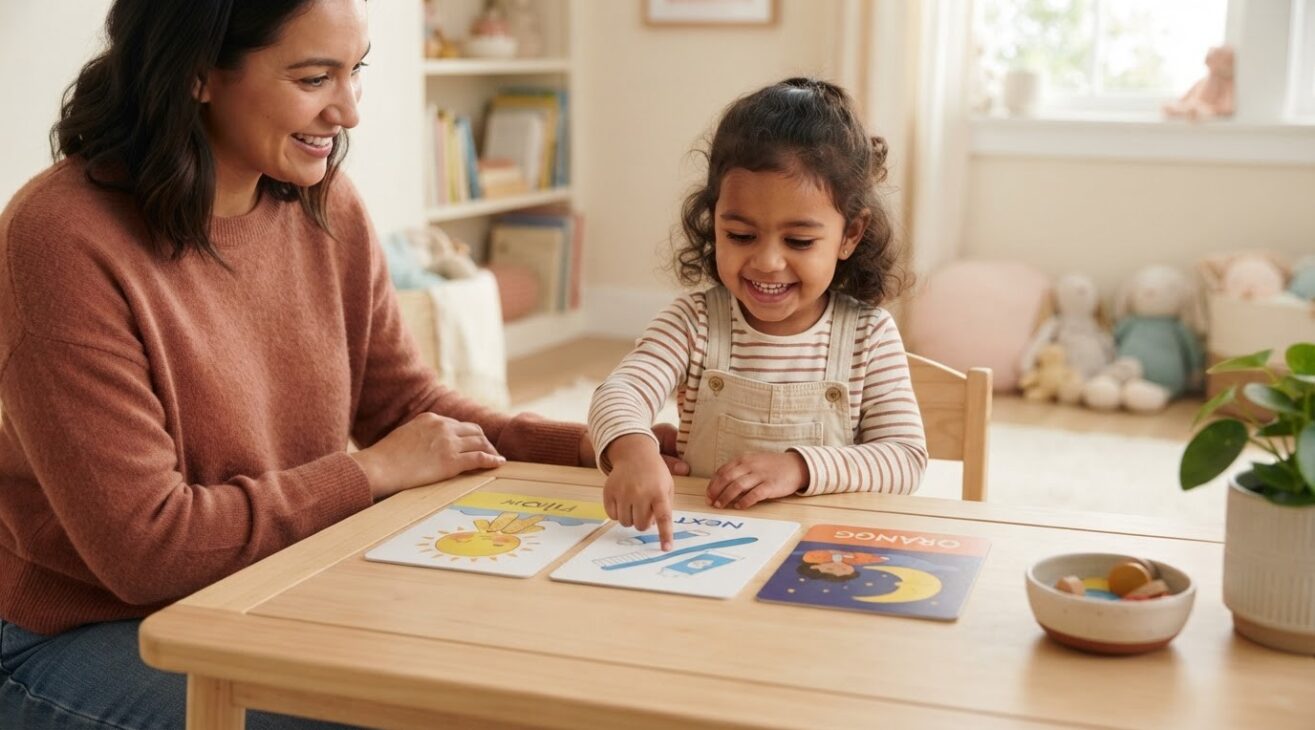
Use the first-next-last routine idea as a tiny play invitation rather than a test. Turn the first-next-last routine idea into a simple concept hunt for color recognition: choose two to four clear real-world examples, name the concept while your child looks or handles them, then match, compare, move, or find another example. Show the first turn yourself, pause, and let your child’s response decide whether you repeat, simplify, or add one small variation. This supports noticing and naming colors in familiar objects and everyday settings.
Related Resources
Looking for more ways to support color recognition beyond this activity? Explore Flashcards & Learning Cards for picture, word, and concept cards that make the skill easy to revisit in short, playful practice. For guided local or online learning opportunities, browse Early Learning & Preschool to find early-learning and preschool classes, programs, activities, businesses, or events where children can get guided practice with this learning area.
What This Practices
This kind of activity is useful because it connects the learning idea with a real experience. Instead of asking your child to remember something abstract, you give them something concrete to notice and respond to. For a 3-year-old preschooler, participation can look like talking, pretending, matching, sorting, drawing, moving, building, retelling, or making a simple choice. The focus is not on speed or correctness; it is on giving your child a useful experience with color recognition that is easy to repeat.
What You Need
- two to four familiar objects that clearly show the target color, shape, size, position, or concept
- a few large familiar objects, pictures, or household items
How to Do It
- Choose two to four clear examples for the first-next-last routine activity. A simple setup makes color recognition easier to notice.
- Name the target idea while pointing to or handling one obvious example of color recognition. Show first; questions can come later.
- Invite your child to find, move, match, compare, or act out one second example through talking, pretending, matching, sorting, drawing, moving, building, retelling, or making a simple choice.
- Put two examples side by side and describe what is the same, different, bigger, smaller, above, below, earlier, later, or otherwise relevant to the concept.
- Look for one final example somewhere else in the room, routine, book, or outdoor space so the concept connects to real life.
What to Say
Keep your language short and connected to what is happening. You do not need to use every phrase below; choose a few that sound natural in your family.
- “I see ___.”
- “Find another ___.”
- “These match.”
- “That one is a different color.”
- “Let’s put the same colors together.”
- “What color do you notice?”
What to Notice
There is no single response you need to see for the activity to be worthwhile. Look for small signs that your child is engaged with the idea.
- The goal is participation and curiosity, not a perfect answer or finished product.
- If interest fades, stop and try again another time; short positive experiences are easier to repeat.
- Your child may show interest through explaining a choice, using the target idea in play, remembering a step, changing a plan, or adding a new example.
Make It Easier
If the first-next-last routine setup feels busy, remove extra choices and return to one clear example. Model the first example and offer only two options at a time. Use a picture, object, or gesture to make the idea concrete.
Try This Next
Once the first-next-last routine idea feels familiar, keep the same basic structure but change one feature—location, object, order, role, or example. Ask your child to create one new example, explain a simple choice, or use the same skill in pretend play.
Use It in Everyday Life
The easiest way to keep learning useful is to let the same idea show up in ordinary moments. Try one of these simple extensions:
- Use the same concept word in different places so your child sees that the idea applies beyond one activity.
- Compare only a few clear examples at a time and give your child time to notice before asking questions.
- Point out color recognition on clothing, dishes, toys, rooms, signs, or outdoor objects.
Keep Learning
Repeating color recognition with a first-next-last routine for 3 year old preschoolers in a few meaningful contexts can make the idea more familiar without turning it into drill work. Within Colors, Shapes & Everyday Concepts, related ideas to explore next include Positions & Spatial Words, Shape Recognition, and Color Sorting & Matching. You do not need to work on them all at once; choose the one that naturally connects with what your child enjoyed today. Follow your child’s interest, keep the tone warm and low-pressure, and stop while the activity still feels successful.