
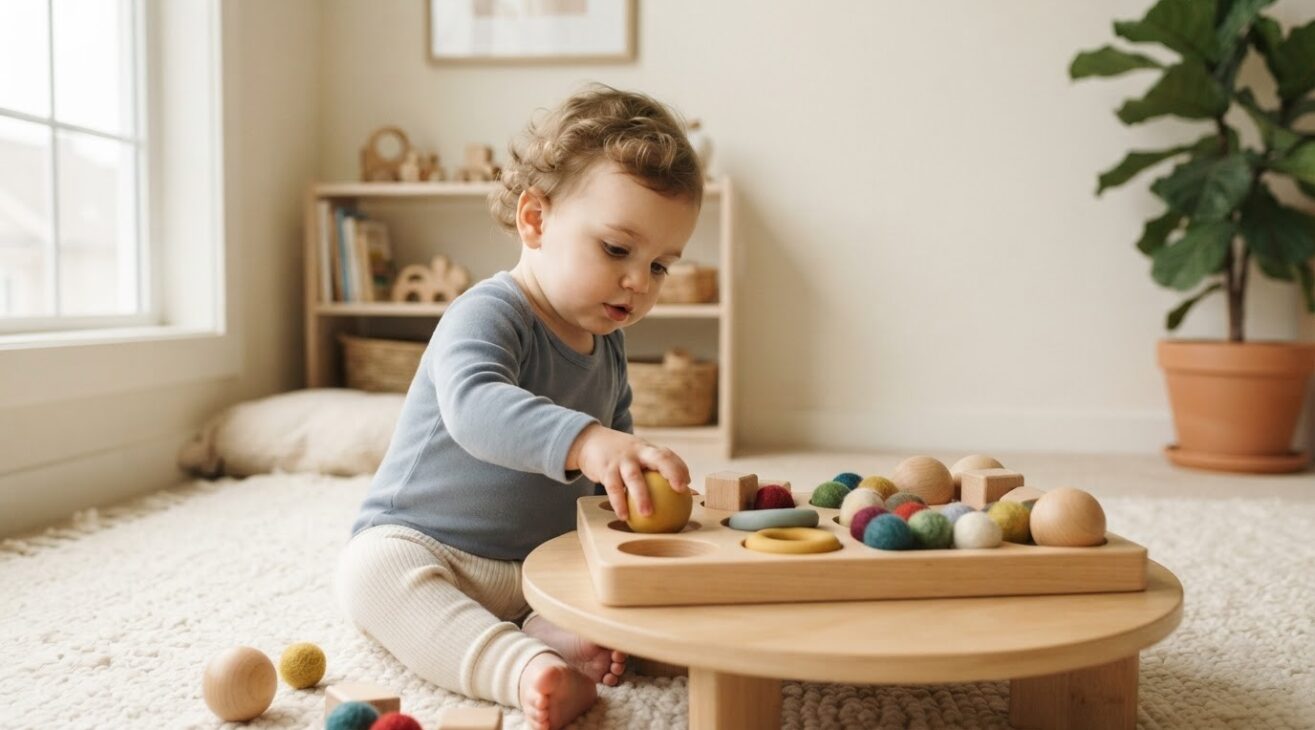
Fine Motor & Sensory for 1-Year-Old Toddlers
Fine motor & sensory for 1 year old toddlers can fit naturally into everyday play and routines. For a 1-year-old toddler, focus on simple words, gestures, choices, movement, and repetition: model one small idea, repeat it naturally, and follow your child’s interest rather than turning the moment into a test.
For hands-on ways to practice fine motor & sensory at home, explore Fine Motor & Sensory for related learning materials. You can also browse Early Learning & Preschool to find relevant local or online classes, activities, businesses, lessons, and events.
Quick Answer for Parents
Make fine motor & sensory easy to understand and actionable from infancy through age 5. Choose your child’s age, pick one small thing to practice, and use the ideas that fit your family. This is a menu of possibilities, not a checklist.
How the Ideas Grow With Age
- Babies: shared attention, sounds, gestures, books, movement, and sensory play.
- 1–2 years: familiar words, choices, sorting, movement, pretend play, and short routines.
- 3–5 years: conversation, storytelling, comparing, explaining, planning, and creative problem solving.
Strong Topics to Explore
- Visual Attention & Tracking: connect it to real play, routines, pictures, objects, movement, or conversation.
- Reaching & Grasping: connect it to real play, routines, pictures, objects, movement, or conversation.
- Hand-Eye Coordination: connect it to real play, routines, pictures, objects, movement, or conversation.
- Put In / Take Out: connect it to real play, routines, pictures, objects, movement, or conversation.
- Stacking & Nesting: connect it to real play, routines, pictures, objects, movement, or conversation.
- Posting & Pegging: connect it to real play, routines, pictures, objects, movement, or conversation.
- Scooping & Pouring: connect it to real play, routines, pictures, objects, movement, or conversation.
- Stickers & Collage: connect it to real play, routines, pictures, objects, movement, or conversation.
- Tongs / Tweezers: connect it to real play, routines, pictures, objects, movement, or conversation.
- Lacing & Threading: connect it to real play, routines, pictures, objects, movement, or conversation.
Words You Can Use
- “Choose your child’s age, pick one small thing to practice, and use the ideas that fit your family.”
- “Look.”
- “Your turn.”
- “More?”
Try It for Five Minutes
Pick one featured fine motor & sensory activity from the child’s age page and try it for five minutes.
- Gather two familiar toys, picture cards, a board book, or stacking cups.
- Choose one focus: Visual Attention & Tracking, Reaching & Grasping, Hand-Eye Coordination.
- Model it first, then pause for your child to look, touch, move, point, speak, or choose.
- Repeat once or twice and finish while it is still fun.
Make It Easier, Then Build
Use one object, one idea, or one choice and model the first turn. When it feels familiar, add one small change—a second object, a new word, another step, or a different place to try it.
Printable Idea
One-page category map showing age → subcategory → activity ideas. Keep it simple and use it as a prompt for interaction, not a worksheet that must be completed.
Related Resources
- A short Banabooza activity for Fine Motor & Sensory
- A hands-on game, book, song, or printable connected to Fine Motor & Sensory
- A product from Fine Motor & Sensory or a class/activity from Early Learning & Preschool
Keep this page handy as a simple reference for fine motor & sensory for 1 year old toddlers and return to one idea whenever it fits your routine.